

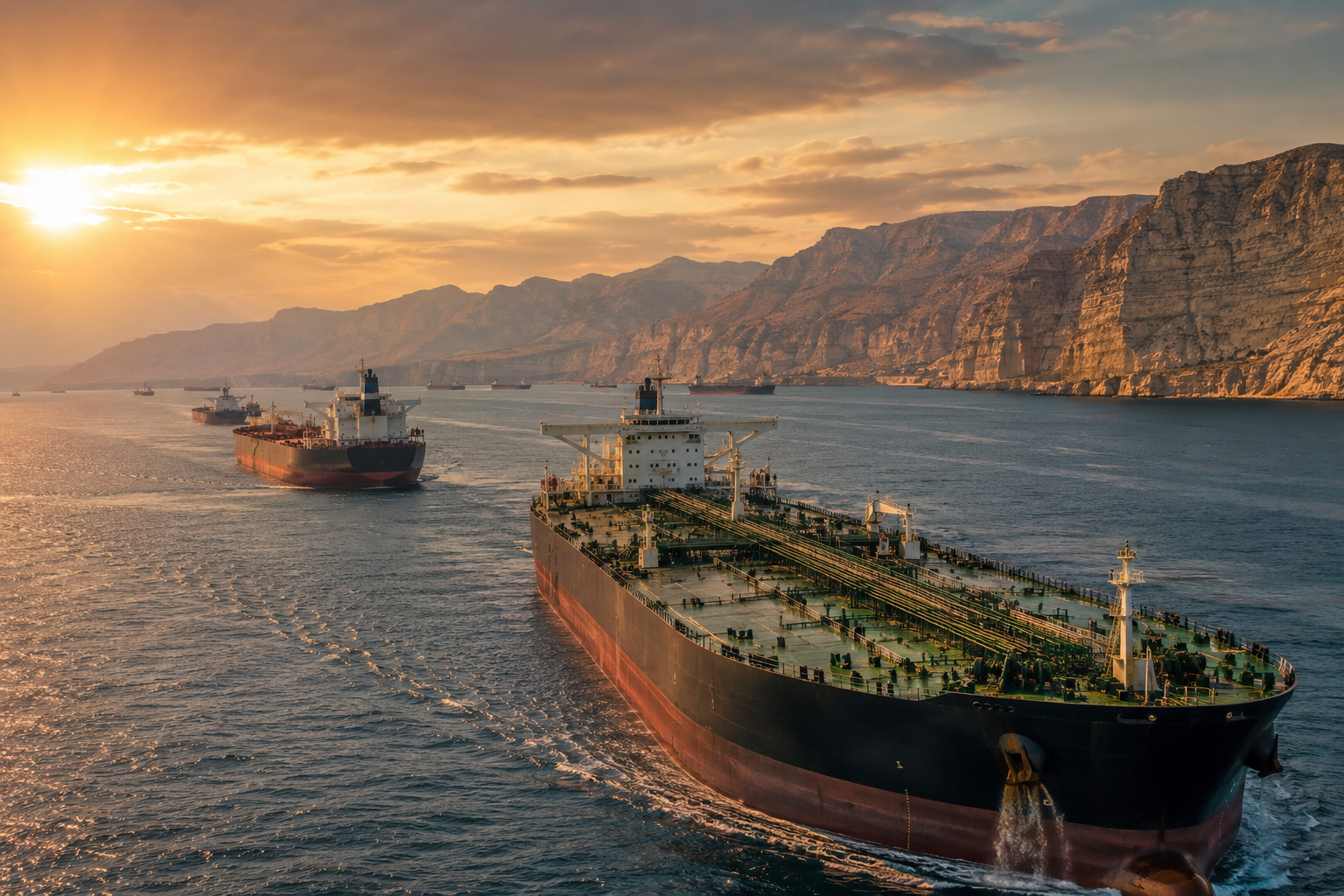
The rising Hormuz toll crisis is creating fresh anxiety across global markets, diplomatic circles, and the energy industry.
As tensions continue around the Strait of Hormuz, Iran has introduced an idea that could reshape one of the world’s most important trade routes. Instead of fully blocking the waterway, Tehran argues that charging transit fees for commercial ships would be less harmful and more manageable.
The proposal has sparked worldwide debate because the strait handles a huge share of global oil shipments. Any disruption there can quickly send shockwaves through economies everywhere.
Why the Strait of Hormuz Matters So Much: Hormuz toll crisis
The Strait of Hormuz is one of the world’s most important maritime routes.
Located between Iran and Oman, the narrow waterway connects the Persian Gulf with the open ocean. It serves as a major passage point for global energy exports.
According to the report, around 20 percent of the world’s oil exports travel through the strait.
That number alone explains why governments are taking the Hormuz toll crisis seriously.
A Small Waterway With Massive Global Impact
Even though the strait is geographically narrow, its global importance is enormous.
Oil-producing countries depend on it to send exports overseas. At the same time, major economies rely on those shipments to keep fuel supplies stable.
If shipping becomes more expensive or restricted, consumers around the world may eventually feel the effects through higher prices.
Iran’s Argument for Charging Transit Fees: Hormuz toll crisis
Iran believes a toll system would be less destructive than completely shutting down the strait.
Supporters of the proposal argue that ships could continue operating while Iran collects transit payments. Tehran sees this as a way to maintain pressure without causing a total collapse in regional trade.
Iranian officials and analysts linked to the government suggest this option could reduce military escalation while still protecting Iran’s interests.
Why Iran Prefers a Toll Over a Blockade
A full blockade would likely create immediate global panic.
By comparison, a toll system may appear more controlled and economically manageable.
Supporters of the idea claim it could:
- Keep oil exports moving
- Avoid immediate military confrontation
- Reduce disruption to global supply chains
- Increase economic leverage for Iran
Still, critics argue the proposal could violate international shipping norms.
The United States Strongly Rejects the Plan: Hormuz toll crisis
The United States has strongly opposed the toll proposal.
According to the report, US Secretary of State Marco Rubio rejected the idea and warned that global powers would not support it.
Washington believes major international waterways should remain open and free from political restrictions.
Why the US Sees the Plan as Dangerous
American officials fear that accepting toll payments during geopolitical crises could create a dangerous international precedent.
If one country successfully controls a key trade route through political pressure, other nations may attempt similar strategies in the future.
That concern is one reason the Hormuz toll crisis has attracted global attention far beyond the Middle East.
Oil Markets Are Already Feeling the Pressure: Hormuz toll crisis
Global oil markets react quickly whenever tensions rise near the Strait of Hormuz.
Even speculation about possible restrictions can push prices upward.
Energy traders closely monitor every statement coming from Tehran, Washington, and regional powers because uncertainty creates fear across markets.
Rising Costs Affect Ordinary People Too
Higher oil prices do not only affect governments or energy companies.
They eventually impact consumers through:
- More expensive transport
- Higher fuel prices
- Increased shipping costs
- Rising inflation
- More costly goods and services
That is why developments in the Hormuz toll crisis matter worldwide.
What Could Happen if the Strait Is Blocked: Hormuz toll crisis
A full closure of the Strait of Hormuz would likely create severe global consequences.
Shipping companies could avoid the route entirely because of security concerns. Insurance costs for tankers may also rise sharply.
The report explained that disruption in the strait has already contributed to pressure on energy prices and government borrowing costs.
Global Trade Could Face Major Disruption
If oil exports slow significantly, economies around the world could face instability.
Countries heavily dependent on imported fuel may experience supply shortages or price spikes.
Financial markets could also become more volatile if investors fear a wider regional conflict.
Diplomacy Remains Critical
Despite rising tensions, diplomatic communication continues behind the scenes.
Several countries are reportedly involved in helping pass messages between Iran and the United States.
This shows that neither side wants the situation to spiral completely out of control.
The Strait Has Become a Negotiation Tool
Iran understands the strategic value of the Strait of Hormuz.
The proposal for transit fees appears designed to increase pressure while still leaving room for negotiation.
By avoiding a total blockade, Tehran may be trying to maintain leverage without crossing a line that could trigger immediate military escalation.
The Wider Regional Picture
The debate surrounding the strait is happening during a period of broader regional instability.
The United States and Israel have previously carried out strikes linked to Iranian targets, while Iran has responded with warnings and military pressure.
Because of this, every discussion involving the Strait of Hormuz now carries geopolitical weight.
Why the World Is Watching Closely
The waterway affects much more than regional politics.
It influences:
- Global oil supplies
- Shipping security
- Inflation rates
- International trade
- Financial market confidence
That explains why world leaders are closely monitoring the Hormuz toll crisis.
Can a Compromise Be Reached?
For now, no final agreement exists regarding tolls, shipping access, or future restrictions.
However, the debate itself highlights how fragile the current situation has become.
Several outcomes remain possible:
- Diplomatic compromise
- Increased military presence
- Temporary trade arrangements
- Stronger economic pressure
- Renewed regional escalation
Everything may depend on whether diplomacy can lower tensions before the situation worsens.
Final Thoughts
The growing Hormuz toll crisis shows how closely global energy, trade, and politics are connected.
Iran argues that charging transit fees is a safer and less damaging alternative to completely blocking the Strait of Hormuz. Meanwhile, the United States and its allies continue to reject the idea, warning that it could threaten international shipping rules and economic stability.
For now, uncertainty remains high.
What happens next in the Strait of Hormuz could influence fuel prices, financial markets, and regional security across the world. As tensions continue, global attention will remain fixed on this critical waterway.
Stay informed, because developments around the Strait of Hormuz are moving fast.
Read Another Interesting news here: US-Iran Deal
