

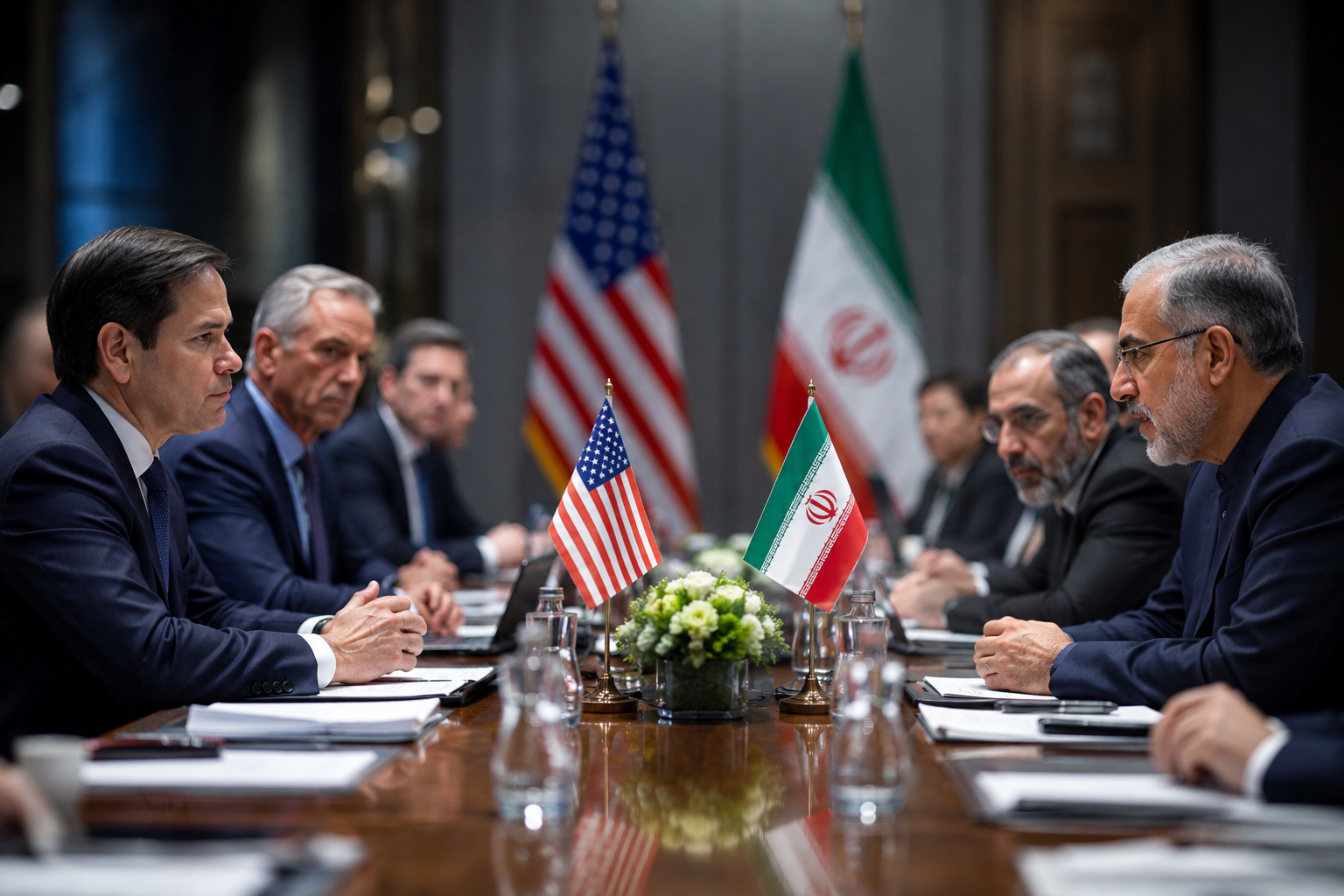
The US-Iran deal talks may be moving in a hopeful direction, but the road ahead still looks tense, risky, and uncertain.
US Secretary of State Marco Rubio said there are “some good signs” that a deal to end the Iran war could be possible. However, he also warned that he does not want to be too optimistic.
His comments came as diplomatic messages continued between Iran and the United States, with Pakistani mediators playing a role in the process.
Why the US-Iran Deal Matters Now: US-Iran deal
The possible US-Iran deal matters because the conflict has already shaken global politics and markets.
A fragile ceasefire has been in place since early April, but both sides have warned that fighting could start again.
That makes every diplomatic move important.
At the heart of the talks are several major issues:
- The Strait of Hormuz
- Iran’s uranium enrichment
- US and Israeli strikes on Iran
- Iran’s response to pressure
- The risk of a wider war
For many countries, this is not only a regional crisis. It is also an economic and security issue.
Marco Rubio Sees “Good Signs” in Talks: US-Iran deal
Marco Rubio spoke to reporters in Florida before flying to Sweden, where he was due to meet NATO foreign ministers.
He said talks were making progress, but he also described Iran’s political system as “fractured.”
That warning matters.
It suggests Washington may see signs of movement, but still doubts whether every part of Iran’s leadership is united behind diplomacy.
Pakistan’s Role in the Talks
According to the report, Pakistani representatives travelled to Iran on Thursday.
Iranian news agency ISNA also reported that messages between Iran and the US were still being exchanged through Pakistani mediators.
This shows that talks are not direct in the usual sense. Instead, another country is helping pass messages between the two sides.
Strait of Hormuz Remains a Major Problem
One of the biggest obstacles to a US-Iran deal is the Strait of Hormuz.
The waterway is extremely important because it carries about one-fifth of global oil exports.
Since the US and Israel launched strikes on Iran on 28 February, Tehran has effectively blocked the strait.
Iran has claimed sovereignty over the waterway and said it would fully reopen it only if it can charge tolls to commercial ships.
Rubio Rejects Iran’s Toll Demand
Marco Rubio strongly rejected Iran’s demand for tolls.
He said no one supports that system and called it unacceptable.
He also warned that such a move would make a diplomatic deal unworkable.
For Washington, this issue is not small. It affects global trade, oil markets, and international shipping.
Global Energy Prices Feel the Pressure
The Strait of Hormuz crisis has already created wide economic effects.
Because the waterway is so important for oil exports, disruption there can quickly affect fuel prices.
The report said the disruption has sent energy prices soaring and has also hit government borrowing.
That is why many governments are watching the US-Iran deal talks closely.
A successful agreement could reduce pressure on global markets. A failure could create deeper uncertainty.
Iran’s Uranium Enrichment Is Another Sticking Point
Another major issue is Iran’s uranium enrichment.
At the White House, Donald Trump said he may have to take “very drastic” action if Iran does not guarantee it will not get a nuclear weapon.
The report also said Tehran has kept its stockpile of near weapons-grade enriched uranium.
Trump said the US wants to obtain and destroy that stockpile.
Iran’s Position on Uranium
Before Trump’s comments, two senior Iranian sources reportedly told Reuters that Ayatollah Mojtaba Khamenei had issued a directive saying the uranium should not be sent abroad.
That creates a serious challenge.
If Iran refuses to send uranium out, and the US insists Iran cannot keep it, the talks could face a major deadlock.
Ceasefire Still Looks Fragile
The ceasefire between the US and Iran has been in place since early April.
However, both sides have continued to use strong language.
Trump said in a Truth Social post that he had told the US military to be ready for a full, large-scale assault on Iran if no deal is reached.
Meanwhile, Iran’s Revolutionary Guard warned that it would extend the war beyond the region if the US attacks again.
This is why the possible US-Iran deal feels urgent.
The situation may be quiet on the surface, but the threats show how quickly it could change.
What Could Make a Deal Possible?
A deal may become possible if both sides find a way to reduce pressure without looking weak.
For the US, the key demands appear clear:
- Iran must not get a nuclear weapon
- The Strait of Hormuz must not be controlled through tolls
- Regional war risks must be lowered
For Iran, the likely concerns include sovereignty, security, and control over its nuclear material.
The talks may depend on whether mediators can create a compromise that both sides can accept.
Why This Moment Feels Different
The current moment feels important because both hope and danger are present at the same time.
On one hand, Rubio’s “good signs” comment suggests diplomacy is not dead.
On the other hand, the threats from both sides show that the conflict could return quickly.
The US-Iran deal is not guaranteed. Still, the fact that messages are being exchanged shows that both sides are keeping a diplomatic door open.
Final Thoughts
The possible US-Iran deal has become one of the most important diplomatic stories in the world right now.
Marco Rubio has pointed to hopeful signs, but he also made it clear that the situation remains difficult. The Strait of Hormuz, Iran’s uranium stockpile, and repeated threats from both sides continue to stand in the way.
For now, diplomacy is alive, but fragile.
If the talks succeed, they could calm markets, reduce war fears, and reopen a path toward stability. If they fail, the region may face another dangerous turn.
Stay informed, because this story could change quickly.
Read Another Interesting news here: China Business Shift
