

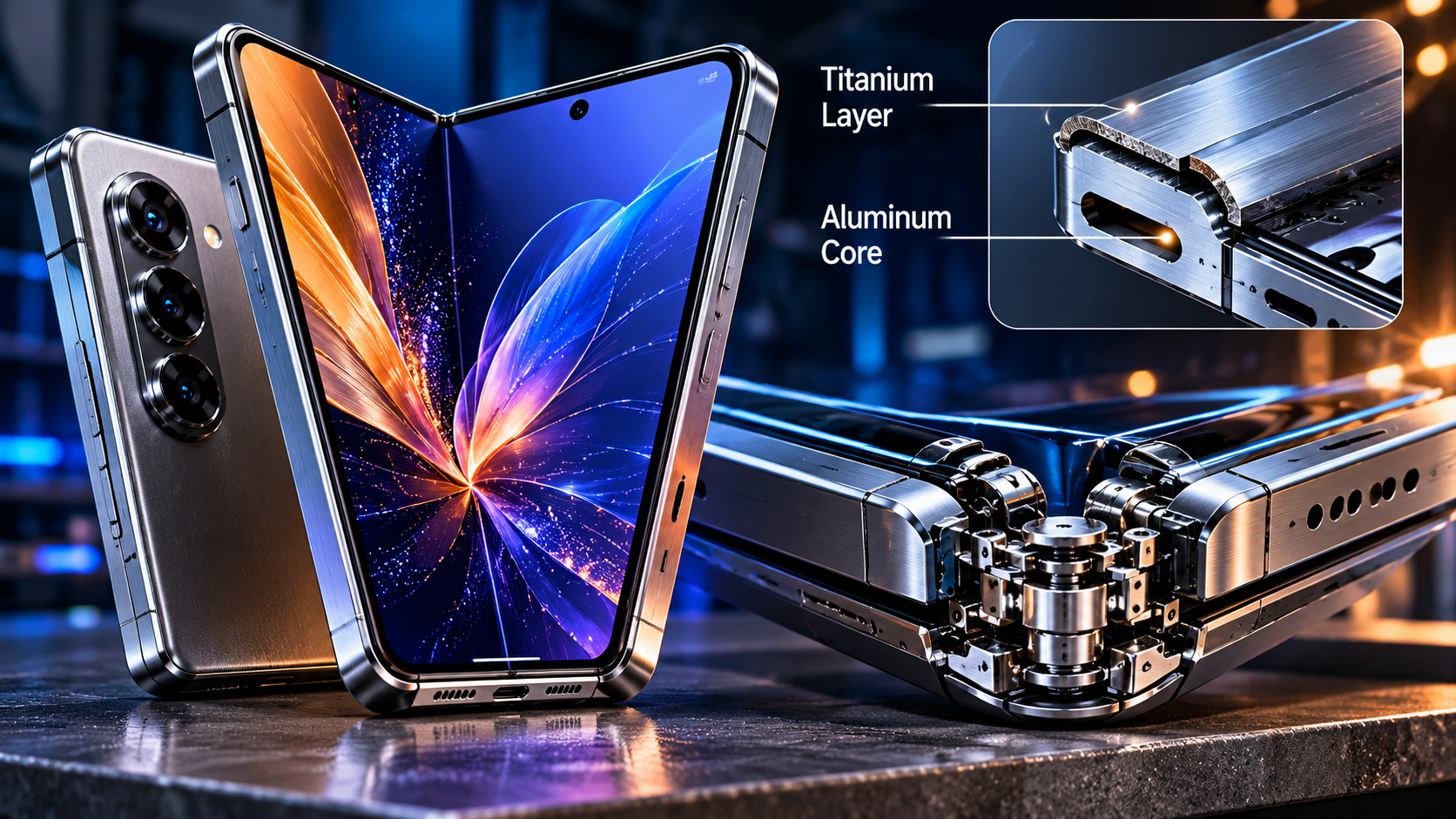
The future of the Samsung foldable frame may soon look stronger, lighter, and more premium than ever before. Samsung is reportedly planning a new titanium-aluminum hybrid frame for upcoming foldable smartphones, signaling another major step forward in foldable device design.
Foldable phones have already transformed the smartphone industry with futuristic displays and flexible form factors. However, durability has remained one of the biggest concerns for users.
That is why Samsung’s reported move toward a hybrid metal structure is attracting so much attention across the technology world.
If successful, the new frame design could improve strength, reduce weight, and make future foldable devices feel even more premium.
Why Foldable Phone Durability Matters: Samsung foldable frame
Foldable phones operate differently from traditional smartphones.
Unlike regular devices, foldables contain moving hinges and flexible displays that experience repeated folding and unfolding every day.
This creates additional pressure on the phone’s structure.
Users often worry about:
- Long-term durability
- Frame strength
- Hinge stability
- Device thickness
- Weight balance
Because foldables are premium products, buyers expect both innovation and reliability.
Samsung appears determined to address those concerns through new material improvements.
Samsung’s New Hybrid Frame Plan Explained: Samsung foldable frame
According to the report, Samsung is considering a combination of titanium and aluminum for future foldable phone frames.
This hybrid approach could provide several advantages over traditional aluminum-only designs.
Titanium is widely known for:
- High strength
- Premium feel
- Corrosion resistance
- Lightweight durability
Meanwhile, aluminum helps reduce overall manufacturing complexity and keeps devices lighter.
By combining both materials, Samsung may achieve a balance between durability, weight, and cost efficiency.
Why Titanium Is Becoming Popular in Smartphones: Samsung foldable frame
Titanium has gained increasing popularity in premium consumer electronics.
Several manufacturers now use titanium because it offers strong structural performance without dramatically increasing device weight.
Compared to standard metals, titanium often provides:
- Better resistance to bending
- Improved structural rigidity
- More premium aesthetics
- Greater durability over time
For foldable devices, these benefits become especially important because the frame experiences constant physical movement.
Samsung’s reported interest in titanium reflects a broader trend toward stronger and more advanced smartphone materials.
Foldable Phones Continue Evolving Rapidly: Samsung foldable frame
The foldable smartphone market has changed significantly in recent years.
Early foldable devices faced criticism over:
- Fragile displays
- Thick designs
- Heavy weight
- Hinge durability
- High prices
However, manufacturers continue improving the technology with every new generation.
Samsung remains one of the most influential companies in the foldable segment.
Its foldable lineup helped push the category into mainstream consumer awareness.
Now, frame materials are becoming another major area of innovation.
Why Frame Design Matters So Much: Samsung foldable frame
A foldable phone’s frame does far more than simply hold components together.
The frame directly affects:
- Structural strength
- Device flexibility
- Weight distribution
- User comfort
- Long-term reliability
Because foldables include complex hinges and moving parts, frame engineering becomes much more challenging compared to traditional smartphones.
Even small material changes can significantly impact overall durability and usability.
Lightweight Devices Remain a Priority: Samsung foldable frame
One of the biggest complaints about foldable phones involves weight.
Foldables often feel heavier than standard smartphones because of:
- Larger displays
- Additional hinge systems
- Reinforced internal structures
Samsung’s titanium-aluminum hybrid approach may help reduce weight while maintaining strong durability.
This balance matters because consumers increasingly want foldable phones that feel practical for daily use rather than bulky experimental devices.
A lighter frame could improve portability and comfort significantly.
Premium Materials Help Strengthen Brand Image: Samsung foldable frame
Smartphone companies increasingly use premium materials to differentiate flagship devices.
Consumers now associate materials like titanium with luxury, strength, and advanced engineering.
Using titanium in future foldables could help Samsung position its devices even more strongly in the ultra-premium smartphone category.
This strategy also reflects growing competition among smartphone manufacturers.
Brands constantly search for new ways to make flagship devices stand out visually and structurally.
Competition in Foldable Phones Is Intensifying: Samsung foldable frame
Samsung no longer dominates the foldable market alone.
Several major manufacturers continue launching foldable devices with improved hardware and slimmer designs.
Competition is growing rapidly across:
- Hinge technology
- Display durability
- Camera systems
- Device thickness
- Premium materials
Because of this, Samsung must continue innovating aggressively to maintain leadership.
The rumored titanium-aluminum frame could become one of the company’s key selling points in future foldables.
Engineering Foldable Phones Is Extremely Complex: Samsung foldable frame
Creating foldable smartphones involves enormous engineering challenges.
Manufacturers must carefully balance:
- Flexibility
- Strength
- Heat management
- Battery placement
- Internal space efficiency
Every design decision affects multiple parts of the device.
Adding titanium introduces additional complexity because the material behaves differently during manufacturing compared to aluminum.
That means Samsung’s engineering teams likely spent significant time testing structural performance and production feasibility.
Consumers Expect Longer Device Lifespans: Samsung foldable frame
Modern smartphone buyers increasingly expect devices to last longer.
Premium foldables often carry high price tags, so users want confidence that their phones can handle years of daily use.
Improved frame materials could help reduce concerns about wear and tear over time.
Stronger frames may also improve protection during accidental drops or pressure-related stress.
As foldables become more mainstream, durability may become one of the most important purchasing factors.
The Foldable Market Could Grow Further
Many analysts believe foldable smartphones still represent an early stage of a much larger market shift.
Future improvements may include:
- Thinner devices
- Better battery life
- More durable displays
- Lower prices
- Stronger materials
Samsung’s hybrid frame strategy could become part of this broader evolution.
As technology improves, foldables may eventually become as common as traditional smartphones.
That possibility continues driving heavy investment across the industry.
Why Material Innovation Shapes Smartphone Design
Smartphone innovation is no longer focused only on processors and cameras.
Materials now play a major role in product development.
Companies increasingly compete through:
- Structural engineering
- Device thickness
- Heat management
- Durability improvements
- Premium finishes
The shift toward titanium shows how material science is becoming central to the future of consumer electronics.
For foldable devices especially, structural design can directly influence user confidence and long-term adoption.
Samsung’s Future Foldables Could Feel More Refined
If the reported hybrid frame arrives in future devices, users may notice several improvements immediately.
Possible benefits include:
- Stronger feel in hand
- Reduced overall weight
- Better resistance to bending
- Enhanced premium appearance
- Improved long-term durability
These changes may help foldable phones feel less experimental and more polished for mainstream consumers.
That transition could become important for the next phase of foldable smartphone adoption worldwide.
Final Thoughts
The latest reports surrounding the Samsung foldable frame suggest the company is continuing to push foldable smartphone engineering into a more advanced era.
By reportedly exploring a titanium-aluminum hybrid structure, Samsung appears focused on improving durability, reducing weight, and strengthening the premium feel of future foldable devices.
As competition in the foldable market intensifies, material innovation may become just as important as processing power and display technology.
Consumers are increasingly demanding devices that combine futuristic design with everyday reliability.
If Samsung successfully delivers these upgrades, future foldables could become stronger, lighter, and far more appealing to mainstream smartphone users around the world.
Read Another Interesting news here: Quantum Supremacy Laptop
