

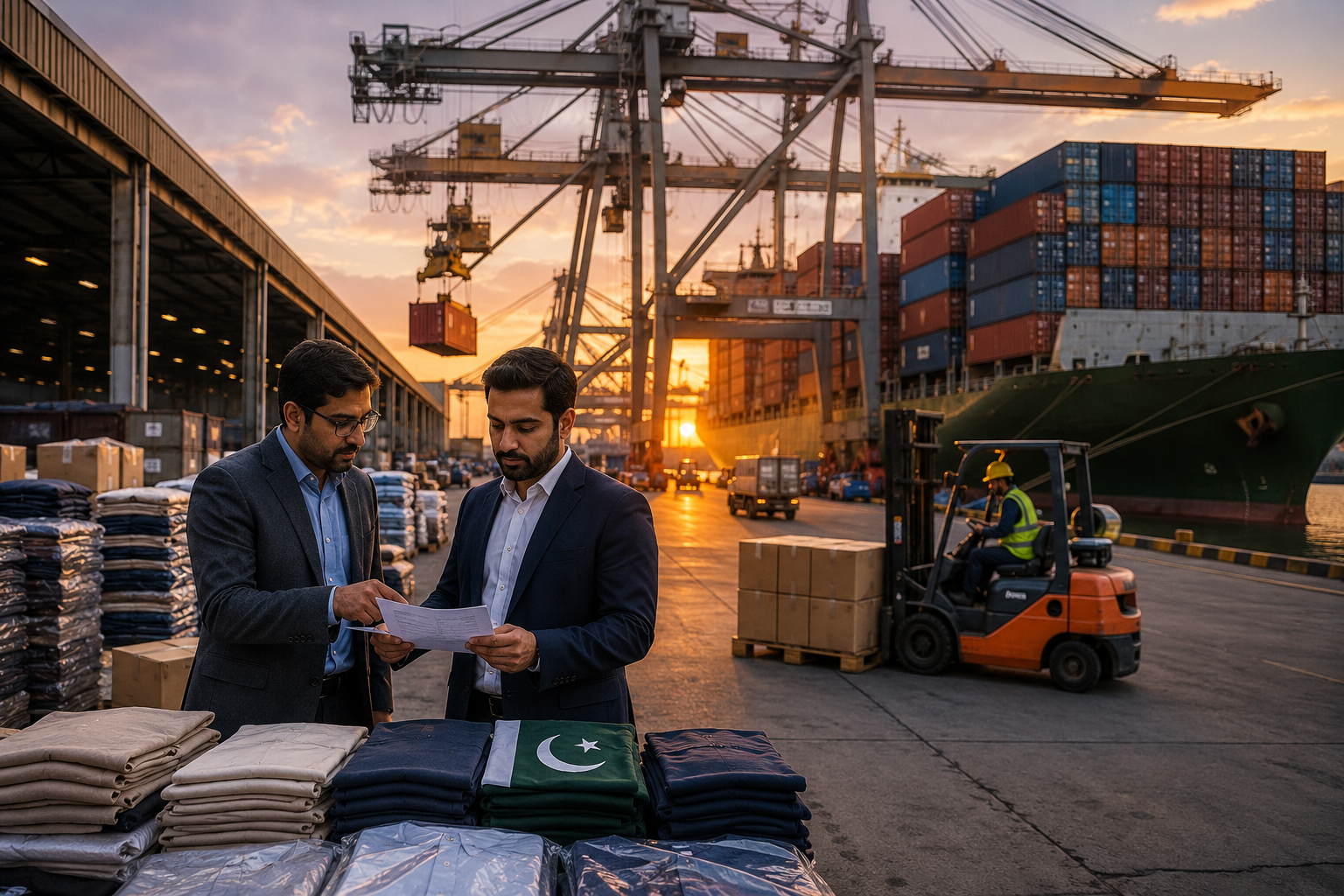
The story of Pakistan EU exports has become increasingly frustrating for businesses, exporters, and policymakers. Despite enjoying trade advantages under the GSP Plus scheme, Pakistan’s exports to European markets continue moving at a slower pace than expected.
For years, many believed duty-free access to the European Union would significantly boost Pakistan’s exports and strengthen the country’s economy. While exports did increase in some sectors, overall growth has remained weaker than hoped.
Now, questions are growing louder across Pakistan’s business community. Why are exports still sluggish despite special trade access to one of the world’s biggest markets?
The answer involves a complex mix of economic challenges, industrial limitations, global competition, and shifting international demand.
What Is the GSP Plus Scheme?
The Generalised Scheme of Preferences Plus (GSP Plus) is a special European Union trade arrangement that offers developing countries reduced or zero duties on many exports.
Pakistan received GSP Plus status in 2014, creating major optimism for exporters.
The agreement gave Pakistani products easier access to European markets, especially in industries like:
- Textiles
- Garments
- Leather goods
- Sports products
- Surgical instruments
At the time, many experts predicted strong export growth and increased foreign exchange earnings.
However, more than a decade later, the expected transformation has not fully happened.
Pakistan’s Exports Still Face Slow Growth: Pakistan EU exports
Despite GSP Plus benefits, Pakistan’s export performance toward Europe has remained relatively weak in recent years.
The report highlighted concerns that exports have not expanded at the pace policymakers initially expected.
Business leaders argue that duty-free access alone cannot guarantee export success.
Instead, countries also need:
- Competitive industries
- Stable economic policies
- Reliable energy supply
- Strong manufacturing capacity
- Efficient logistics systems
Without these factors, trade advantages become harder to fully utilize.
Why Europe Remains Important for Pakistan: Pakistan EU exports
The European Union remains one of Pakistan’s largest export destinations.
European markets are especially valuable because they buy large volumes of manufactured goods, particularly textile products.
For Pakistan, exports to Europe help generate:
- Foreign exchange reserves
- Industrial employment
- Manufacturing activity
- Economic stability
That is why sluggish export growth creates serious concern for both government officials and private businesses.
Every slowdown affects jobs, factories, and broader economic recovery efforts.
Textile Sector Continues Dominating Exports: Pakistan EU exports
Pakistan’s textile industry still accounts for the majority of exports to Europe.
The sector includes:
- Readymade garments
- Home textiles
- Fabrics
- Yarn products
While textiles helped Pakistan benefit from GSP Plus access, overdependence on one sector also created vulnerabilities.
Experts often warn that Pakistan needs greater export diversification to remain competitive globally.
Countries with broader export portfolios usually adapt more effectively to changing international demand.
Why Diversification Matters
Heavy reliance on textiles creates several risks.
If global textile demand weakens, Pakistan’s exports immediately face pressure.
Diversification could help Pakistan strengthen sectors such as:
- Information technology
- Engineering goods
- Pharmaceuticals
- Agricultural products
- Value-added manufacturing
Expanding into new industries may help Pakistan reduce long-term trade vulnerabilities.
Energy Costs Hurt Export Competitiveness: Pakistan EU exports
One of the biggest problems facing Pakistani exporters is high production costs.
Manufacturers continue struggling with:
- Expensive electricity
- Gas shortages
- Fuel price increases
- Inflationary pressure
These challenges make Pakistani products more expensive compared to competitors from other countries.
Exporters often argue that even with duty-free market access, high domestic costs reduce their ability to compete internationally.
As a result, some buyers shift toward lower-cost suppliers elsewhere.
Global Competition Is Becoming Tougher: Pakistan EU exports
Pakistan is no longer competing only regionally.
Today, exporters face intense competition from countries including:
- Bangladesh
- Vietnam
- India
- China
- Turkiye
Many of these countries have invested heavily in industrial modernization, infrastructure, and export-focused policies.
Some competitors also offer lower production costs or faster delivery systems.
That creates additional pressure on Pakistani exporters trying to maintain market share in Europe.
Economic Instability Creates Additional Pressure: Pakistan EU exports
Pakistan’s broader economic instability has also affected export performance.
Businesses continue facing uncertainty linked to:
- Currency fluctuations
- Interest rates
- Import restrictions
- Inflation
- Financial constraints
When economic conditions remain unstable, companies often struggle to expand production or attract long-term investment.
Export industries especially need predictable conditions to compete effectively in international markets.
European Buyers Are Changing Expectations: Pakistan EU exports
Global markets are evolving rapidly.
European buyers now pay increasing attention to:
- Sustainability
- Environmental standards
- Supply chain transparency
- Labor conditions
- Product quality
Exporters must continuously adapt to these expectations.
Countries that modernize production systems and improve compliance standards often gain stronger positions in European markets.
Pakistan’s exporters are working to improve in these areas, but challenges remain.
Infrastructure and Logistics Problems Continue: Pakistan EU exports
Efficient trade depends heavily on infrastructure and logistics.
Pakistani exporters often face delays linked to:
- Port congestion
- Transportation inefficiencies
- Customs procedures
- Shipping costs
These problems increase delivery times and operational expenses.
In global trade, reliability matters enormously.
International buyers prefer suppliers who can consistently deliver products quickly and efficiently.
That is another reason why export growth sometimes remains slower than expected.
Businesses Want Stronger Government Support: Pakistan EU exports
Many exporters believe stronger policy support is necessary to fully benefit from GSP Plus opportunities.
Industry leaders continue demanding:
- Lower energy costs
- Better financing access
- Export incentives
- Stable economic policies
- Industrial modernization support
Business groups argue that Pakistan already has valuable market access. The bigger challenge now is improving competitiveness at home.
Without structural improvements, export growth may continue facing limitations.
GSP Plus Still Provides Major Opportunities: Pakistan EU exports
Despite current challenges, GSP Plus still remains extremely valuable for Pakistan.
Duty-free access to European markets gives Pakistani exporters an important competitive advantage in many sectors.
If economic reforms and industrial improvements continue, Pakistan could still expand exports significantly in future years.
Experts believe the opportunity remains available, but stronger implementation and policy consistency are needed.
The long-term success of Pakistan’s exports may depend on how effectively the country addresses internal weaknesses.
The Future of Pakistan’s Export Economy
Pakistan’s export future will likely depend on several key factors:
- Industrial competitiveness
- Economic stability
- Energy reforms
- Export diversification
- Global market adaptation
The country’s young workforce and manufacturing base still provide major potential.
However, unlocking that potential requires long-term planning, investment, and policy consistency.
Global trade is becoming increasingly competitive, and countries that fail to modernize risk falling behind.
Final Thoughts
The latest concerns surrounding Pakistan EU exports highlight a difficult reality for the country’s economy.
While GSP Plus opened important doors to European markets, trade benefits alone have not been enough to guarantee strong export growth.
Pakistan still faces major challenges involving energy costs, industrial competitiveness, infrastructure, and economic stability.
At the same time, significant opportunities remain available if reforms continue and exporters adapt to changing global demands.
The coming years may determine whether Pakistan can fully capitalize on its access to one of the world’s largest consumer markets.
Readers and businesses alike should continue watching how economic policies and global trade conditions shape Pakistan’s export future.
Read Another Interesting news here: Microsoft AI Development
