

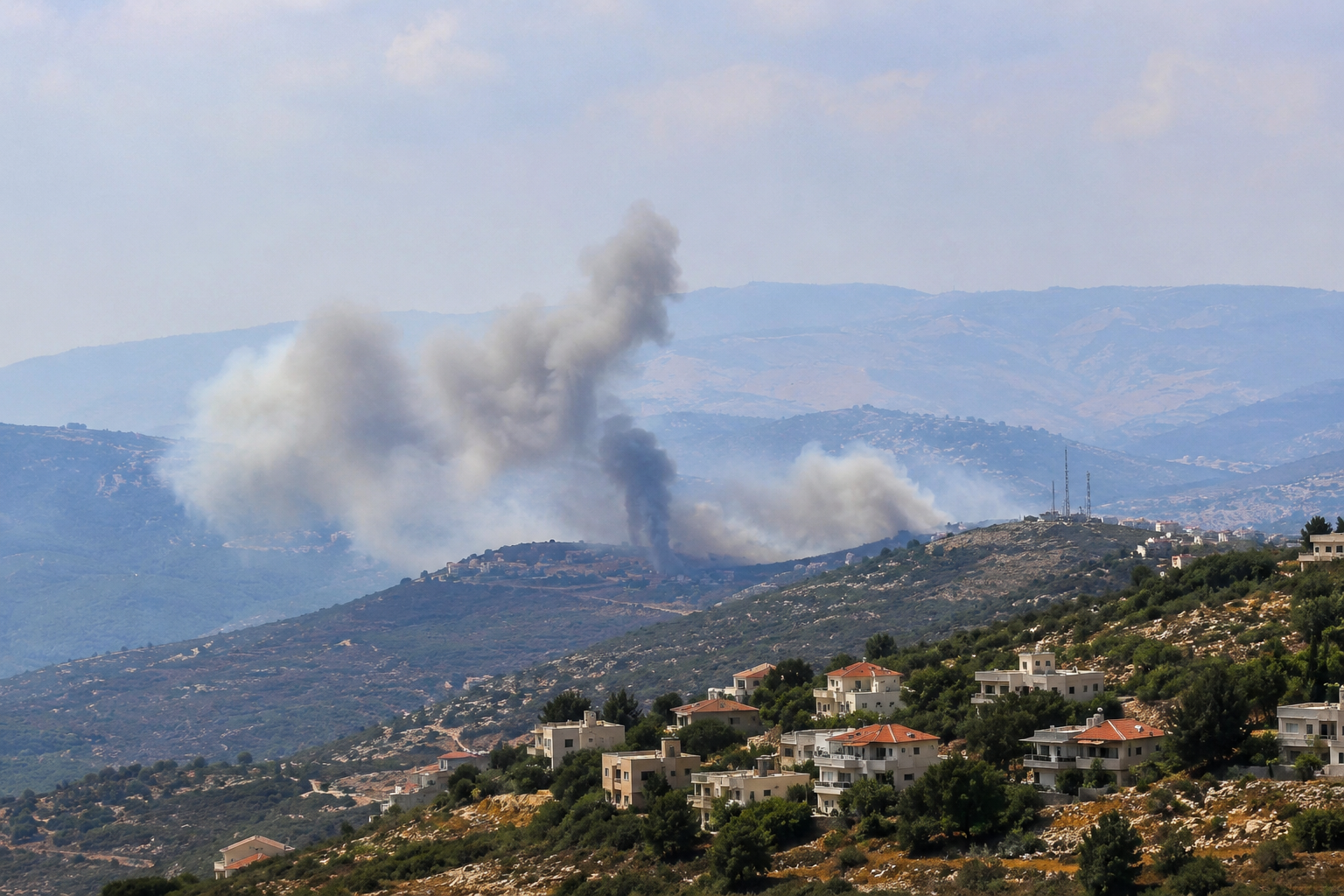
The fragile Israel Lebanon ceasefire is once again under pressure after new Israeli attacks hit southern Lebanon and areas near the Syrian border. The latest strikes have raised fears that tensions in the region could spiral into a wider conflict despite ongoing diplomatic efforts to keep the ceasefire alive.
Residents in southern Lebanon woke up to explosions, smoke, and panic as Israeli military operations expanded across multiple locations. The attacks came at a time when many civilians were already struggling with displacement, fear, and economic hardship after months of regional instability.
As both sides trade accusations, international observers are becoming increasingly concerned about whether the ceasefire can survive.
Fresh Israeli Strikes Shake Southern Lebanon: Israel Lebanon ceasefire
Israeli attacks targeted several locations in southern Lebanon, according to reports from Lebanese media and officials.
The strikes reportedly hit areas near Nabatieh and other southern regions. Witnesses described loud explosions and military aircraft flying over border communities during the attacks.
The Israeli military claimed the operations targeted Hezbollah-linked infrastructure and fighters.
At the same time, Lebanon accused Israel of violating the ceasefire agreement that had reduced tensions in previous months.
For civilians living near the border, the violence brought back painful memories of earlier confrontations.
Attack Near Syrian Border Raises Alarm: Israel Lebanon ceasefire
One of the most concerning developments involved Israeli strikes near the Syrian border.
The attacks reportedly targeted routes and locations that Israel believes are connected to the transfer of weapons and military supplies.
This part of the conflict has become increasingly sensitive because the border region plays an important role in regional military activity involving armed groups and supply networks.
The latest operations signaled that Israel remains focused on preventing what it sees as growing security threats beyond Lebanon alone.
Hezbollah and Israel Continue Dangerous Tensions: Israel Lebanon ceasefire
Although the ceasefire reduced direct fighting for a period, tensions between Hezbollah and Israel never fully disappeared.
Both sides have continued exchanging threats and accusations for months.
Israel says Hezbollah continues building military capabilities near the border, while Hezbollah accuses Israel of repeated violations and aggressive military actions.
This latest escalation once again exposed how fragile the current calm truly is.
Why Southern Lebanon Remains Sensitive: Israel Lebanon ceasefire
Southern Lebanon has long been one of the most unstable areas in the Middle East.
The region carries deep political and military significance because:
- Hezbollah maintains strong influence there
- Border towns remain highly militarized
- Israeli security concerns remain intense
- Civilians often become trapped during escalations
Even small incidents can quickly trigger wider military responses.
That is why every new strike creates fears of another large-scale confrontation.
Civilians Once Again Caught in Fear: Israel Lebanon ceasefire
Families living in southern Lebanon described scenes of panic after the latest attacks.
Many residents rushed indoors while parents tried calming frightened children as aircraft sounds echoed overhead.
Some areas experienced damage to buildings and infrastructure, adding more pressure on communities already struggling with instability.
For civilians, the biggest fear is that the ceasefire could completely collapse.
Years of conflict have already damaged livelihoods, businesses, schools, and healthcare systems in many border regions.
Now, many residents worry they may once again face long-term displacement.
International Concern Continues to Grow: Israel Lebanon ceasefire
The latest violence has triggered renewed international concern.
Diplomatic efforts from regional and global powers have focused heavily on preventing a larger regional war.
Several countries and international organizations continue urging restraint from all sides.
The fear is simple: if fighting between Israel and Hezbollah expands further, the conflict could spread across multiple borders and involve additional armed groups.
That possibility would create serious consequences for the entire Middle East.
Israel Says Operations Target Security Threats: Israel Lebanon ceasefire
Israeli officials defended the military operations by arguing they were necessary for national security.
According to Israeli statements, the strikes focused on infrastructure and movements linked to Hezbollah activities.
Israel has repeatedly said it will not allow threats to grow near its northern border.
The country also remains highly concerned about weapon transfers and military coordination involving regional armed groups.
Israeli leaders argue that preventative strikes are necessary to stop future attacks before they happen.
Lebanon Accuses Israel of Violating Ceasefire: Israel Lebanon ceasefire
Lebanese officials strongly criticized the attacks and described them as clear violations of the ceasefire understandings.
The Lebanese government warned that repeated military operations risk pushing the region toward another dangerous crisis.
Officials also called on international mediators and the United Nations to intervene and prevent further escalation.
The situation places Lebanon in a difficult position because the country is already facing severe political and economic challenges internally.
New military tensions could deepen instability even further.
Border Communities Live Under Constant Pressure: Israel Lebanon ceasefire
People living near the Israel-Lebanon border have spent years adapting to uncertainty.
Many families regularly monitor news updates, emergency warnings, and military activity.
In some villages, schools and businesses have already experienced repeated disruptions due to regional tensions.
Residents say daily life becomes impossible whenever military activity increases.
Some of the biggest concerns include:
- Fear of sudden air strikes
- Damage to homes and roads
- School closures
- Economic losses
- Civilian displacement
Even during periods of relative calm, anxiety never fully disappears.
Could the Ceasefire Collapse Completely?
Analysts now worry that repeated military exchanges could eventually destroy the fragile ceasefire framework.
Several risks continue increasing:
- More cross-border strikes
- Miscalculation by armed groups
- Civilian casualties
- Regional political pressure
- Expanding military retaliation
If tensions continue growing, diplomatic efforts may become much harder.
The Middle East has already witnessed how quickly local clashes can evolve into wider regional crises.
That is why many international observers are urgently calling for de-escalation before the situation worsens.
Regional Stability Faces Another Test: Israel Lebanon ceasefire
The latest attacks highlight how unstable the regional situation remains despite ceasefire agreements.
Every new strike deepens mistrust between the parties involved.
At the same time, civilians continue paying the highest price whenever violence returns.
Regional powers, international diplomats, and humanitarian organizations are now watching developments closely.
Many fear that if tensions continue rising, the humanitarian consequences could become severe once again.
Final Thoughts
The latest escalation surrounding the Israel Lebanon ceasefire shows how fragile peace remains in one of the world’s most sensitive regions.
Israeli strikes in southern Lebanon and near the Syrian border have increased fears of another dangerous confrontation involving Hezbollah and regional actors.
While both sides continue defending their positions, ordinary civilians remain trapped between political conflict and military escalation.
The coming days will be critical in determining whether diplomacy can calm tensions or whether the region moves closer to another major crisis.
Readers should continue following developments carefully as the situation continues evolving rapidly.
Read Another Interesting news here: France Bans Ben-Gvir
